WISERUNION / Books

From co-creation,
Read about growing together.

From how capital is formed to how the system operates.
Two books, a continuous exploration of connecting theory and technology.

02 Chinese books · Full reading on this site · No registration required

THE BOOKS / Chinese Bookshelf

A set of theories, two reading clues.

Retain the author, edition, and content boundaries of the original book. You can read in order from the beginning, or follow the table of contents to the chapters you care about.

01 / Public reading of the working paper

Stakeholder Capital Theory

Rethinking enterprise value, rights and governance

Study the conditions under which joint contributions form resources, capabilities and cooperative relationships that can be used across time periods, and how corresponding rights and governance arrangements support long-term cooperation.

V1.0 · H03 · 54 public reading units

View the full table of contents here · 54 reading units
  1. Foreword|From organizing funds to organizing co-creation Chinese source
  2. Introduction|How co-creation becomes capital: Re-understanding the value, equity and governance of enterprises Chinese source
  3. Chapter 1 Re-understanding the enterprise: Who is creating value and who can share the future Chinese source
  4. Chapter 1 Achievements and New Issues of the Company System Chinese source
  5. Chapter 2 Co-creators of corporate value Chinese source
  6. Chapter 3 The Breakpoint between Contribution and the Future of the Company Chinese source
  7. Chapter 4 Why Enterprises Need Capital Governance Capabilities Chinese source
  8. Chapter 5 Corporate Purpose: Why We Create Together Chinese source
  9. Part 2 Re-understanding Capital: How Shared Contribution Forms Long-term Growth Power Chinese source
  10. Chapter 6 The ideological foundation and core propositions of stakeholder capital Chinese source
  11. Chapter 7 What is Stakeholder Capital Chinese source
  12. Chapter 8 Formation Mechanism of Stakeholder Capital Chinese source
  13. Chapter 9 Legitimacy of Contributions, Risks and Rights and Interests Chinese source
  14. Chapter 10 Trust and Reciprocity: How to Form Long-term Cooperation Chinese source
  15. Part 3 Organizational Co-Creation: Stakeholder Business Ecosystem Governance Model Chinese source
  16. Chapter 11 Identifying the enterprise’s stakeholder network Chinese source
  17. Chapter 12 Four Ecosystems: The Basic Structure of Enterprise Value Cycle Chinese source
  18. Chapter 13 Six Systems: Connecting Value Creation into a Complete Process Chinese source
  19. Chapter 14: The Governance Cycle from Participation to Growth Chinese source
  20. Part 4 Establishing a Trustworthy System: How Contributions, Rights and Governance Work Chinese source
  21. Chapter 15 Contribution Confirmation: Clearly Record Co-creation Chinese source
  22. Chapter 16 Value Accounting: What is jointly created and who gets what Chinese source
  23. Chapter 17 Equity Design: Matching Returns with Contributions, Responsibilities and Risks Chinese source
  24. Chapter 18 Governance Mechanism: Who makes the rules and who supervises them Chinese source
  25. Chapter 19 Digitization: Making the system an operational system Chinese source
  26. Part 5 Promoting Enterprise Transformation: Starting from a Business Scenario Chinese source
  27. Chapter 20 Employees: Connecting current work and long-term growth Chinese source
  28. Chapter 21 Customers: Establishing relationships that continuously create value Chinese source
  29. Chapter 22 Suppliers, Channels and Partners: Organizing Cross-Enterprise Collaboration Chinese source
  30. Chapter 23 Entrepreneurs and Investors: How to organize long-term capital Chinese source
  31. Chapter 24 Building a company that can grow together Chinese source
  32. Chapter 6 Testing and Development: Establishing a Capital Governance System That Can Stand Up to Practice Chinese source
  33. Chapter 25 How to prove that capital governance creates value Chinese source
  34. Chapter 26 Difficulties that stakeholder capital must answer Chinese source
  35. Chapter 27 WISERUNION: Top-level planning of stakeholder capital governance Chinese source
  36. Chapter 28 Capital Formation in the Era of Co-Creation Chinese source
  37. Conclusion · Begin with your enterprise and organize shared creation Chinese source
  38. Tool Appendix Chinese source
  39. Appendix 1 · Core terms and conceptual boundaries Chinese source
  40. Appendix 2 · Enterprise capital-governance diagnostic Chinese source
  41. Appendix 3 · Stakeholder mapping and relationship-analysis template Chinese source
  42. Appendix 4 · Four ecosystems and six systems mapping Chinese source
  43. Appendix 5 · Contribution events, evidence and confirmation-record template Chinese source
  44. Appendix 6 · Contribution–rights–responsibility–risk matching Chinese source
  45. Appendix 7 · Governance rules and rights-mechanism design template Chinese source
  46. Appendix 8 · First capital-governance pilot: action plan and evaluation Chinese source
  47. Appendix 9 · Theory propositions, evidence and counterexamples Chinese source
  48. Appendix 10 · Stakeholder value, cost and profit-and-loss reporting template Chinese source
  49. Appendix 11 · Prior consultation and shared-commitment checklist Chinese source
  50. Appendix 12 · Crisis scenarios and rights-adjustment stress tests Chinese source
  51. Appendix 13 · Citation, argumentation and evidence-use guidelines Chinese source
  52. References Chinese source
  53. Term Index Chinese source
  54. Reference Notes Chinese source

02 / Institutional research version · Not for sale research version

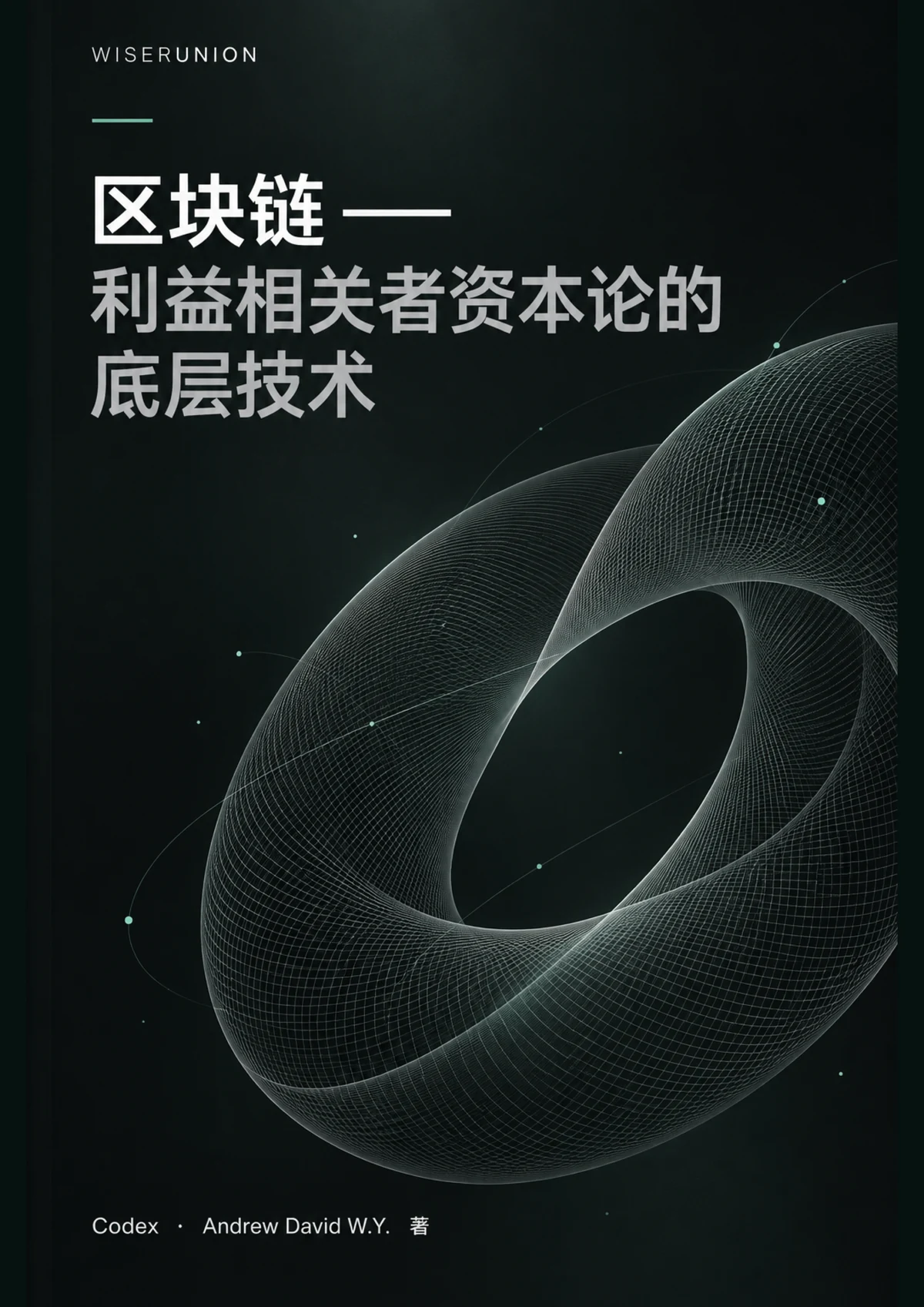
Blockchain - the underlying technology of Stakeholder Capital Theory

Institutional technology, stakeholder capital and evolvable co-creation of order

This book defines blockchain as an institutional technology. Along the two main lines of information replication and asset transfer, social consensus and technical execution, it systematically discusses digital assets, contribution confirmation, capital formation, equity allocation, collaborative governance and evolvable systems.

V1.0 · 57 public reading units

View the full table of contents here · 57 reading units
  1. Introduction Why co-creation requires institutional technology Chinese source
  2. Introduction How Blockchain Becomes the Technical Foundation for Stakeholder Capital Governance Chinese source
  3. "Blockchain - The Underlying Technology of Stakeholder Capital Theory" Core Chart Catalog V1.0 Chinese source
  4. Chapter 1 Institutional Technology: From Information Copying to Asset Transfer Chinese source
  5. Chapter 1 The institutional technical attributes of blockchain Chinese source
  6. Chapter 2 The Fundamental Difference between Information Replication and Asset Transfer Chinese source
  7. Chapter 3 Issues of exclusivity, ownership and property rights in the digital world Chinese source
  8. Chapter 4 From Digital Assets to Stakeholder Capital Chinese source
  9. Chapter 5 From social consensus to institutional rules Chinese source
  10. Chapter 6 Applicable Conditions and Selection Boundaries of Institutional Technology Chinese source
  11. Part 2 Consensus and Implementation: How Institutions Enter Technical Systems Chinese source
  12. Chapter 7 Cryptography: Authorization, Integrity and Verifiable Evidence Chinese source
  13. Chapter 8 Distributed Ledger: How a Common State is Formed Chinese source
  14. Chapter 9 Consensus Mechanism: Confirmation System of Common Ledger Chinese source
  15. Chapter 10 Institutional Arrangements in Different Consensus Mechanisms Chinese source
  16. Chapter 11 Smart Contract: How institutional rules are executed Chinese source
  17. Chapter 12 Reality Connection: How the on-chain system corresponds to off-chain facts Chinese source
  18. Part 3 Contribution Acknowledgment: How Co-Creation Becomes a Verifiable Record Chinese source
  19. Chapter 13 Stakeholder Identity and Relationship Modeling Chinese source
  20. Chapter 14 Commitments, Tasks and Contribution Events Chinese source
  21. Chapter 15 Contribution Evidence and Confirmation Procedures Chinese source
  22. Chapter 16 Contribution Measurement and Value Judgment Chinese source
  23. Chapter 4 Capital and Equity: From Contribution Records to Institutionalized Rights Chinese source
  24. Chapter 17 Capital formation conditions and account system Chinese source
  25. Chapter 18 Equity Structure, Digital Certificates and Rights Transfer Chinese source
  26. Chapter 19 Token Mechanism and Circulation Rules Chinese source
  27. Chapter 20 Income Accounting and Distribution Execution Chinese source
  28. Part 5 Collaborative Governance: How to operate, supervise and revise the system Chinese source
  29. Chapter 21 From technical consensus to multi-party governance Chinese source
  30. Chapter 22 Formulation, implementation and revision of the system Chinese source
  31. Chapter 23 Auditing, Correction and Responsibility Tracing Chinese source
  32. Chapter 24 Cross-organizational collaboration and ecological governance Chinese source
  33. Part 6 System Construction: From Technical Architecture to Validity Testing Chinese source
  34. Chapter 25 The overall technical architecture of stakeholder capital governance Chinese source
  35. Chapter 26 Security, Privacy and Continuous Operation of the System Chinese source
  36. Chapter 27 Implementation Path and System Migration Chinese source
  37. Chapter 28 How to test the true effect of blockchain on capital governance Chinese source
  38. Part 7 Future Institutions: From Programmable Assets to Evolvable Co-Creative Order Chinese source
  39. Chapter 29 From asset transfer to programmable rights and obligations Chinese source
  40. Chapter 30 Capital system jointly created by humans and intelligence Chinese source
  41. Chapter 31 Composable Systems and Cross-Organizational Collaboration Networks Chinese source
  42. Chapter 32 Verifiable, Revisable and Evolvable System Chinese source
  43. Conclusion · Turn shared creation into capital for shared growth Chinese source
  44. Appendix 1 · Stakeholder-capital concepts and technical objects Chinese source
  45. Appendix 2 · Blockchain suitability assessment Chinese source
  46. Appendix 3 · Stakeholder identities, roles and permissions Chinese source
  47. Appendix 4 · Contribution events, evidence and confirmation-status data dictionary Chinese source
  48. Appendix 5 · Capital-formation conditions and rights-registration template Chinese source
  49. Appendix 6 · Mapping institutional provisions to smart-contract functions Chinese source
  50. Appendix 7 · Return accounting, distribution and reconciliation workflow Chinese source
  51. Appendix 8 · Governance proposals, voting and rule-upgrade workflow Chinese source
  52. Appendix 9 · Security, privacy, exceptions and recovery checklist Chinese source
  53. Appendix 10 · System acceptance and technical-effect assessment Chinese source
  54. Appendix 11 · Institutional dimensions of consensus mechanisms Chinese source
  55. Appendix 12 · On-chain control, institutional interests and legal rights checklist Chinese source
  56. Appendix 13 · Future institutional propositions, conditions and falsification paths Chinese source
  57. References Chinese source

IN WRITING / NEW BOOK

"Capital Efficiency Revolution"

Under preparation

This new book is being written. The introduction, official table of contents and main text will be provided after the content is confirmed. There is currently no reading version.

Reading & Versions

The Chinese copies of the two books come from the current public version of yutengfei.com, and the original site content continues to be retained. Sources are provided for each book and reading unit; check and update as needed. Working papers and research versions are not equivalent to formal publication, and do not constitute legal, accounting or investment advice.

Explore research articles and papers →

YOUR WISERUNION

Learn about free membership benefits

Registration and login are not yet open. This window only explains rights and plans, and does not create an account, save an email, or send an email.

Preview the joining process (not yet open)
  1. Register and verify your email address after it is officially opened.
  2. Choose reading, learning and activities based on the actual open scope.
  3. Professional roles submit information and accept review according to independent rules.

Only the proposed steps are shown here. Expanding or reading this process does not indicate successful registration.